
Protect supply
Reduce upstream URL exposure, review suspicious traffic, and keep redirect evidence available.
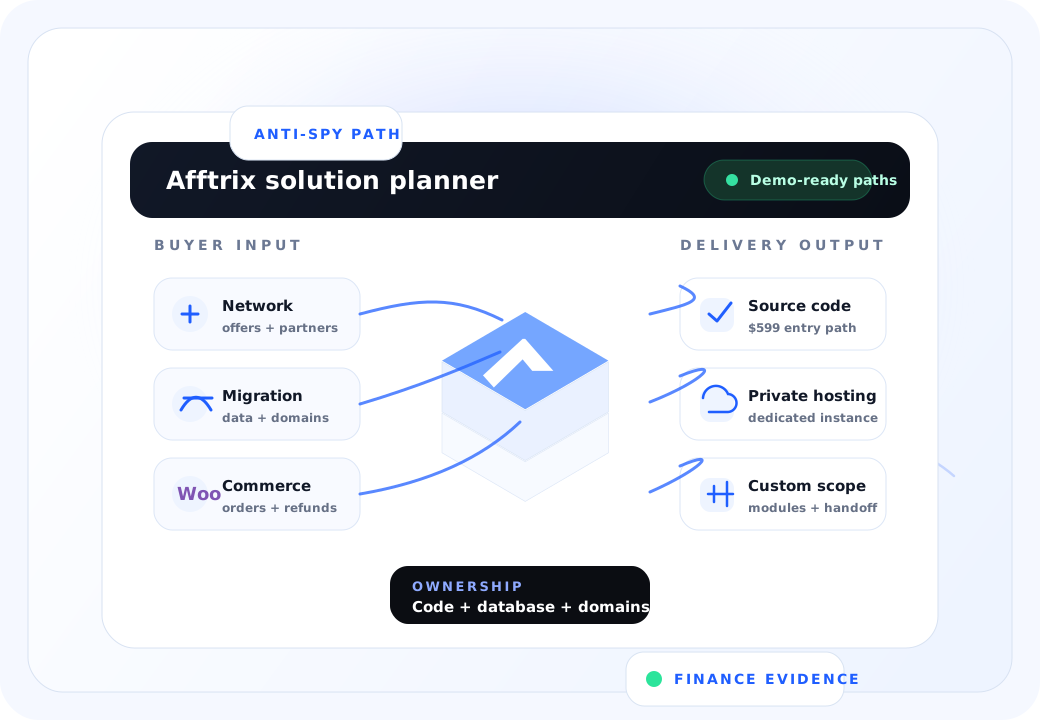
Afftrix fits teams that want the platform, data, offer review, payout logic, and deployment path under their control. This page shows representative buyer scenarios and the proof areas they should inspect in the demo.
$599
Source license
1x
Standard install
1 year
Support and updates
Afftrix buyer proof view
Offer health
Review before traffic
Postback proof
Evidence for disputes
Payout context
Revenue, profit, bills
The strongest buyers usually have real operating complexity: upstream offer changes, partner disputes, payout risk, private deployment needs, or ecommerce attribution requirements.
Reduce upstream URL exposure, review suspicious traffic, and keep redirect evidence available.
Detect dead links, geo issues, payout changes, stale supply, and review-worthy campaign risk.
Compare revenue, payout, profit, reversals, invoices, payment batches, and upstream statements.
Keep tracking records, partner activity, payout history, and custom workflows under your control.
Run offers, partners, payouts, tracking domains, and private reporting from one owned workspace.
Review offer supply, payout changes, caps, partner access, and link health before traffic is exposed.
Keep click IDs, postback responses, conversion evidence, and dispute context visible to account teams.
Connect orders, coupons, products, refunds, CIDs, and partner payouts to explain payable revenue.
Build client-specific reporting, approval rules, migration plans, and source review workflows.
Buy the source code, plan private deployment, and scope custom modules without waiting on a vendor roadmap.
A serious buyer should be able to open the system and see how the platform handles real operator questions. These are the proof areas we recommend checking first.
Demo inspection rule
Do not evaluate only the homepage claim. Inspect the data path from offer source, click, postback, conversion, finance review, and payout handoff.
Performance command view
Operators can inspect revenue, payout, profit, clicks, conversions, CR, trend lines, and top offers before deciding where to focus.
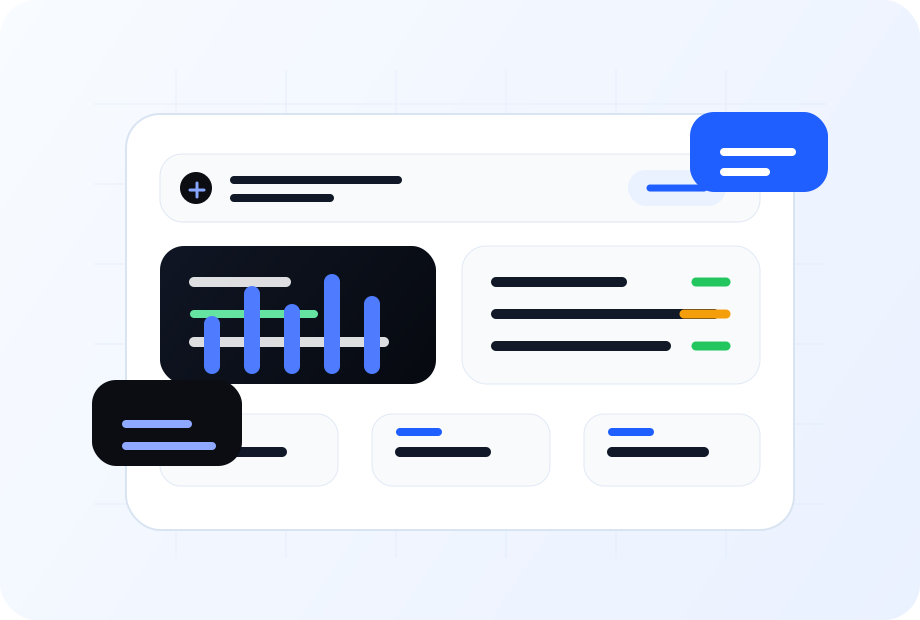
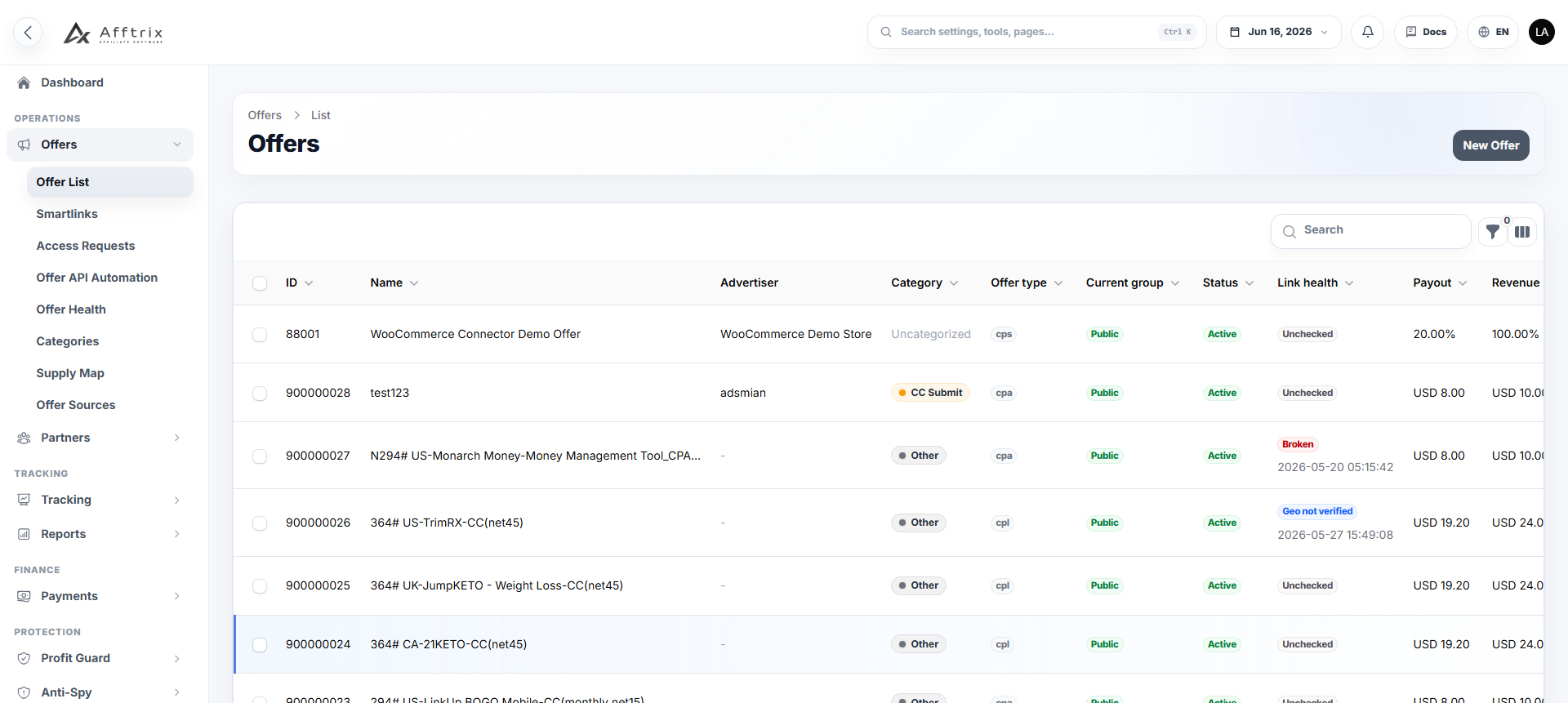
Offer operations
Buyers can check whether the system helps teams review offer supply instead of blindly publishing upstream feed data.
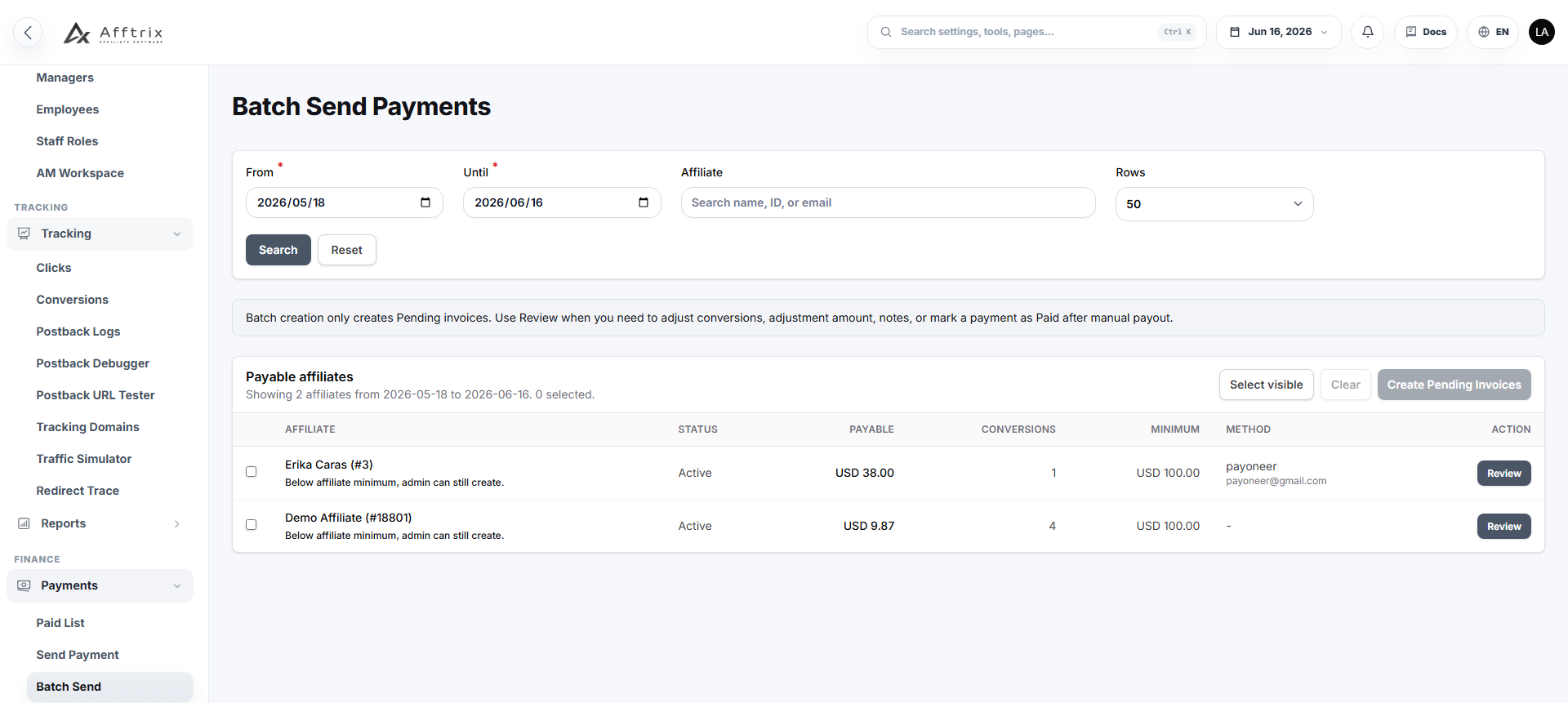
Finance review
Finance teams can evaluate how single payments, batch bills, invoice records, and payout exceptions fit their workflow.
Connector delivery
Commerce teams can inspect order attribution, coupon mapping, connector packaging, and private deployment handoff.
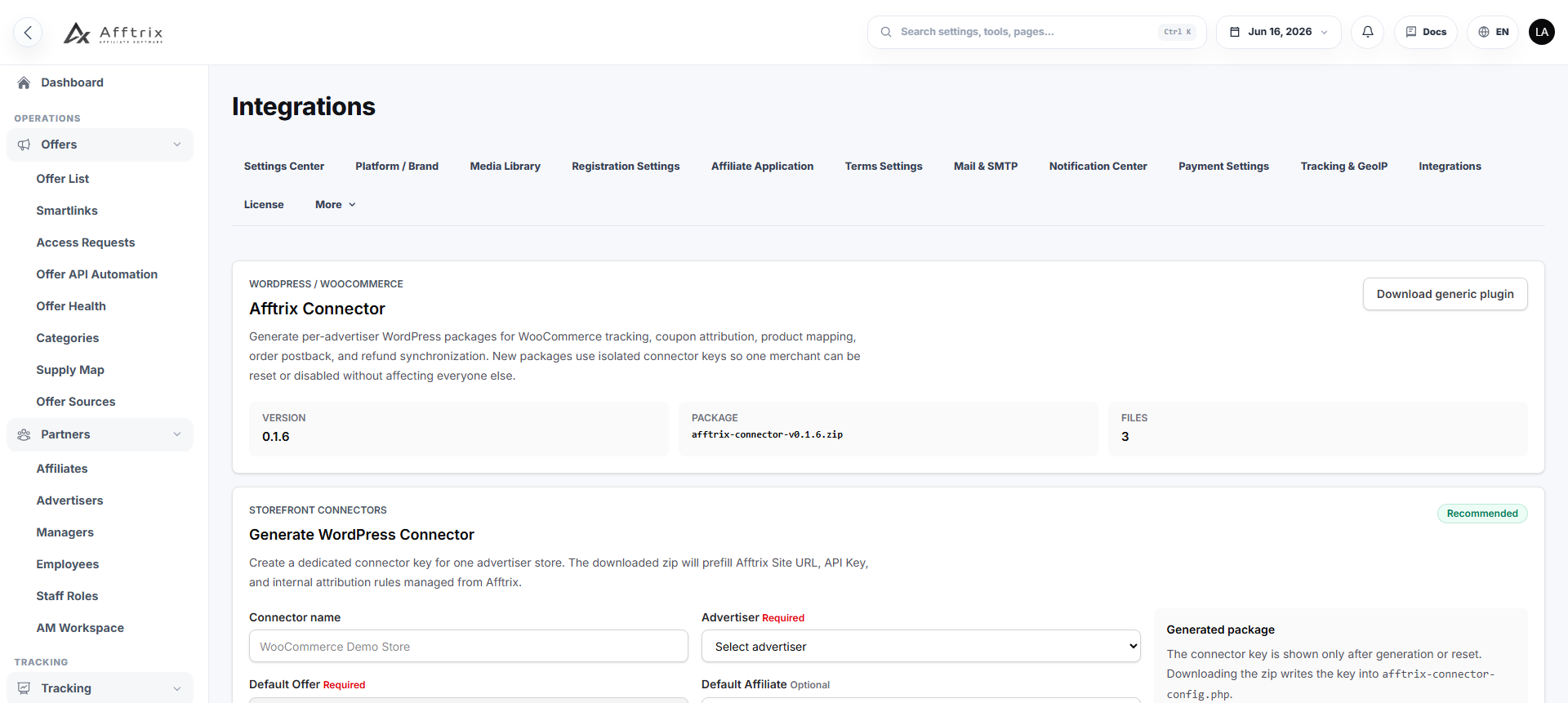
These examples are written from common affiliate-network situations. Use them to decide which workflows you want to verify in the live demo.
What makes a useful customer story here?
It should point to something a buyer can actually inspect: a dashboard, an offer review queue, a postback trace, a payout batch, a connector, or a deployment choice.

CPA network
31%
less wasted partner traffic
"Afftrix gave our operators a clearer path from offer health to partner action. We stopped sending traffic to offers that already showed link and payout risk."
Offer review moved from spreadsheets into a visible queue.

Lead generation team
2.4x
faster dispute resolution
"The postback evidence changed support conversations. Instead of asking engineers for logs, account managers could see click IDs, callback responses, and retry status."
Missing-conversion tickets became easier to resolve.

WooCommerce merchant
18%
more attributable partner revenue
"Coupon, order, refund, and product context finally sat next to affiliate records. Our team could explain payable revenue without rebuilding reports every week."
Merchant reporting became easier to trust.

Performance agency
44%
less migration risk identified early
"The migration review surfaced the fields we would have missed: legacy IDs, tracking domains, payout states, and partner access rules."
The team entered cutover with a real checklist.

Offer supply team
24
offer link alerts in review
"We no longer wait for affiliates to report a dead landing page. Offer health gives our team a place to review broken destinations, geo mismatch, and upstream changes before the campaign is pushed harder."
Offer quality became part of the launch workflow.

Network finance team
1
payout review workspace
"Revenue, payout, profit, reversals, and upstream statements are easier to compare. The finance team can review exceptions before a payment batch or invoice goes out."
Payout review stopped depending on scattered exports.

Traffic quality team
33%
clearer traffic review path
"Anti-spy and fraud review made source decisions easier to explain. We can protect upstream advertiser links while still keeping enough redirect and rule evidence for internal review."
Traffic protection became easier to defend with evidence.

Technical founder team
0
vendor lock-in by design
"The source license changed the buying conversation. We could inspect the real admin, review the deployment path, and plan custom workflow changes without waiting on a SaaS roadmap."
The platform could be evaluated as owned infrastructure.
Some teams lose control at offer intake. Some lose it in postback disputes. Others lose it during payout review, upstream reconciliation, migration, or private deployment.
Account teams need click IDs, callback responses, retry status, and mapped parameters without waiting for engineering.
Operators need rule evidence, redirect checks, country context, traffic quality signals, and a clear hold or reject path.
Finance teams need statement imports, status comparison, revenue and payout deltas, missing rows, and review queues.
Store teams need order, coupon, refund, product, UTM, CID, and payable partner records connected.
Founders need a path to source code, private deployment, tracking domains, database control, and custom workflow changes.
Managers need payment batches, invoice records, review states, and exceptions before balances move out of the system.
The evaluation should be practical. Start with the workflows that are costing your team time, then inspect whether the product exposes enough evidence to run them privately.
Bring the areas slowing the team down: offer checks, postbacks, payout review, migration, anti-spy, or ecommerce attribution.
Open the product areas that match your use case and verify whether the evidence exists in the interface.
Decide whether you want to own the source code, use managed private hosting, or scope custom delivery.
Confirm installation, tracking domains, mail, queue, storage, users, reporting needs, and any migration work.
Buyer fit review
Share your current platform, traffic scale, source-code preference, hosting needs, and the workflows you want to inspect first.